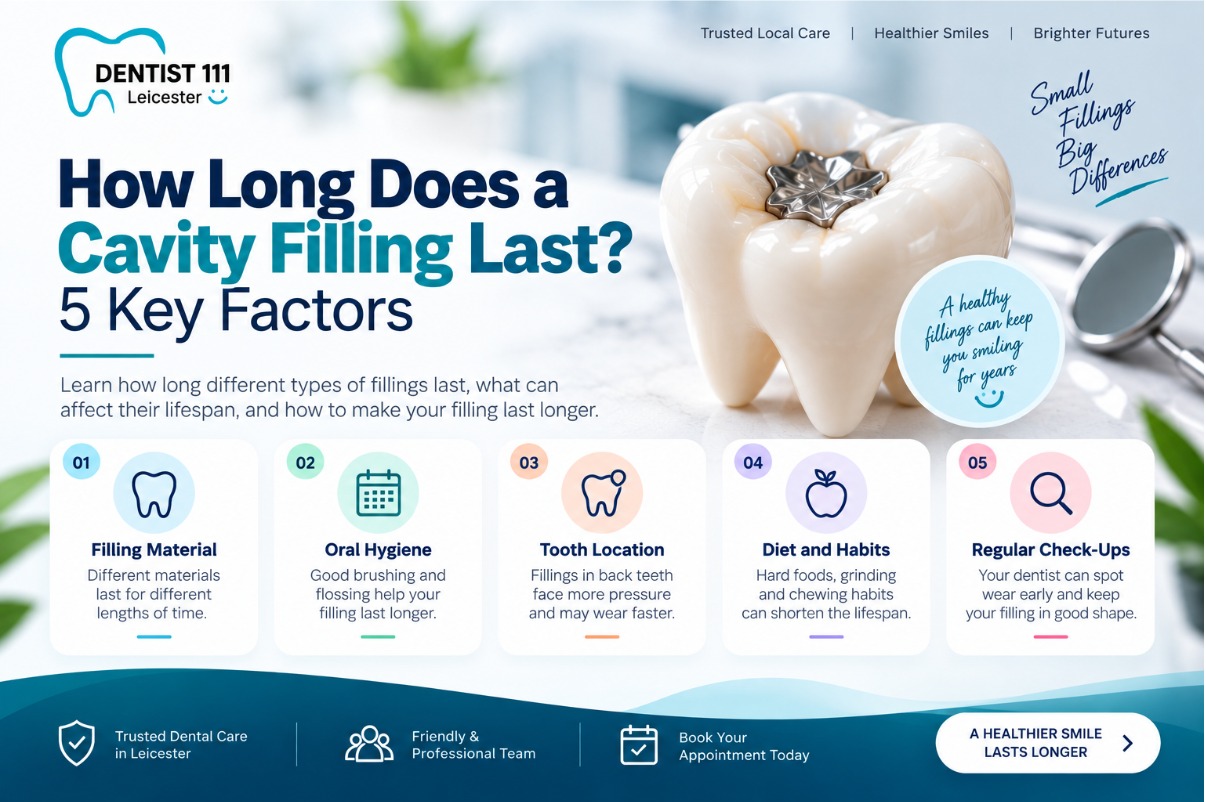
How Long Do Fillings Last? 5 Key Factors That Matter
A cavity filling typically lasts 5–15 years, but some fillings remain functional for 20 years or longer. Lifespan depends on the filling material, restoration size, tooth location, biting forces, oral hygiene and the condition of the surrounding tooth. A filling does not require replacement simply because it reaches a particular age; replacement depends on its clinical condition.
How Long Do Different Types of Fillings Last?
Filling lifespan varies by material, with composite commonly lasting around 5–15 years and amalgam often lasting 10–20 years. Ceramic and gold restorations can also provide long service, while glass ionomer generally has a shorter lifespan than many permanent composite and amalgam restorations.
Filling type | Typical lifespan |
Composite | 5–15 years |
Amalgam | 10–20 years |
Glass ionomer | Generally shorter than composite or amalgam |
Ceramic | 10–20+ years |
Gold alloy | 15–20+ years |
These figures are general ranges rather than guaranteed lifespans. The same material can last for different periods depending on the size of the restoration, tooth location, biting forces, oral health and quality of the restoration.
Composite Fillings
Composite fillings commonly last around 5–15 years. They are tooth-coloured restorations made from resin-based composite and are widely used for repairing cavities.
Recent evidence indicates that conventional composite restorations can achieve more than 90% five-year survival in some clinical evidence. A 2025 systematic review of posterior restorations reported a median survival of approximately 11 years for composite restorations in the included studies.
The lifespan can be shorter when a large portion of a back tooth is restored or when the tooth experiences high chewing forces.
Amalgam Fillings
Amalgam fillings commonly last around 10–20 years and can sometimes remain functional for longer. Their durability has made amalgam a long-established material for restoring cavities, particularly in posterior teeth.
A 2025 systematic review found a median survival exceeding 16 years for amalgam restorations in the included posterior-tooth studies.
Glass Ionomer Fillings
Glass ionomer fillings generally have a shorter service life than many permanent composite and amalgam restorations. Their clinical longevity varies according to the type of restoration and the conditions in which the material is used.
Recent evidence reports lower survival for glass ionomer restorations than conventional composite restorations over comparable periods, although glass ionomer remains useful in specific clinical situations.
Ceramic and Gold Restorations
Ceramic and gold alloy restorations can last 10–20 years or longer when the tooth and restoration remain in good condition. Their longevity depends on factors such as restoration design, tooth location, biting forces and oral health.
Gold restorations are generally made from gold-containing alloys rather than pure gold, while ceramic restorations use tooth-coloured ceramic materials.
For a cavity filling, the material alone does not determine how long the restoration lasts. The condition of the tooth and the forces acting on the restoration are equally important.
What Affects How Long a Filling Lasts?
The size and location of the filling, biting forces, oral health and quality of the restoration all affect how long it remains functional. These factors can increase the risk of wear, fracture, recurrent decay or other problems that lead to repair or replacement.
Filling Size and Number of Tooth Surfaces
Larger fillings generally place greater demands on the remaining tooth structure and restoration. A small filling affecting one surface leaves more natural tooth structure than a large restoration extending across several surfaces.
The number of restored surfaces matters because larger restorations can experience greater functional stress, particularly in back teeth exposed to strong chewing forces.
Tooth Location
Fillings in back teeth experience greater chewing forces than fillings in many front-tooth locations. Molars and premolars absorb substantial forces during chewing, so the restoration and remaining tooth structure are exposed to repeated loading.
Tooth position also affects the type and extent of restoration required. A larger restoration in a heavily loaded posterior tooth can have different longevity from a small restoration in a front tooth.
Biting Forces and Teeth Grinding
Heavy biting forces and teeth grinding can increase stress on a filling and the surrounding tooth. Repeated loading can contribute to restoration wear, cracks or fracture over time.
Bruxism is also associated with differences in restoration longevity. The effect depends on the material, restoration size, tooth and severity of the forces involved.
Oral Health and Recurrent Decay
Good oral health helps protect the tooth around a filling from recurrent decay. Plaque accumulation and frequent exposure to fermentable carbohydrates increase the risk of new decay developing around or next to an existing restoration.
Recurrent decay is one of the commonly reported reasons for restoration failure, particularly when the seal between the restoration and tooth becomes compromised.
Restoration Quality
The quality of the restoration and the technique used to place it can influence its longevity. Proper preparation, material selection, placement and finishing affect how the filling functions within the tooth.
Research on posterior restorations has also identified operator technique, tooth type, restoration size and oral hygiene as factors associated with restoration survival. A filling therefore cannot be assessed by material and age alone.
Do Fillings Need Replacing After a Certain Number of Years?
A filling does not need to be replaced simply because it reaches a particular age. Replacement depends on whether the restoration remains functional and whether the tooth around it remains healthy.
A filling that has been in place for 10 years can remain satisfactory, while another filling may require treatment sooner because of recurrent decay, fracture, wear or loss of its seal.
Dentists assess the condition of the restoration and surrounding tooth during routine examinations. Replacement may be considered when there is:
- Recurrent decay around or beneath the filling
- A cracked or fractured restoration
- Significant wear affecting the restoration's function
- A damaged tooth surrounding the filling
- Loss of the restoration or its seal
- Changes that make the restoration clinically unsuitable
Therefore, there is no universal rule such as replacing every filling after 5, 10 or 15 years. The condition of the filling and tooth is more important than its age alone.
Related Post
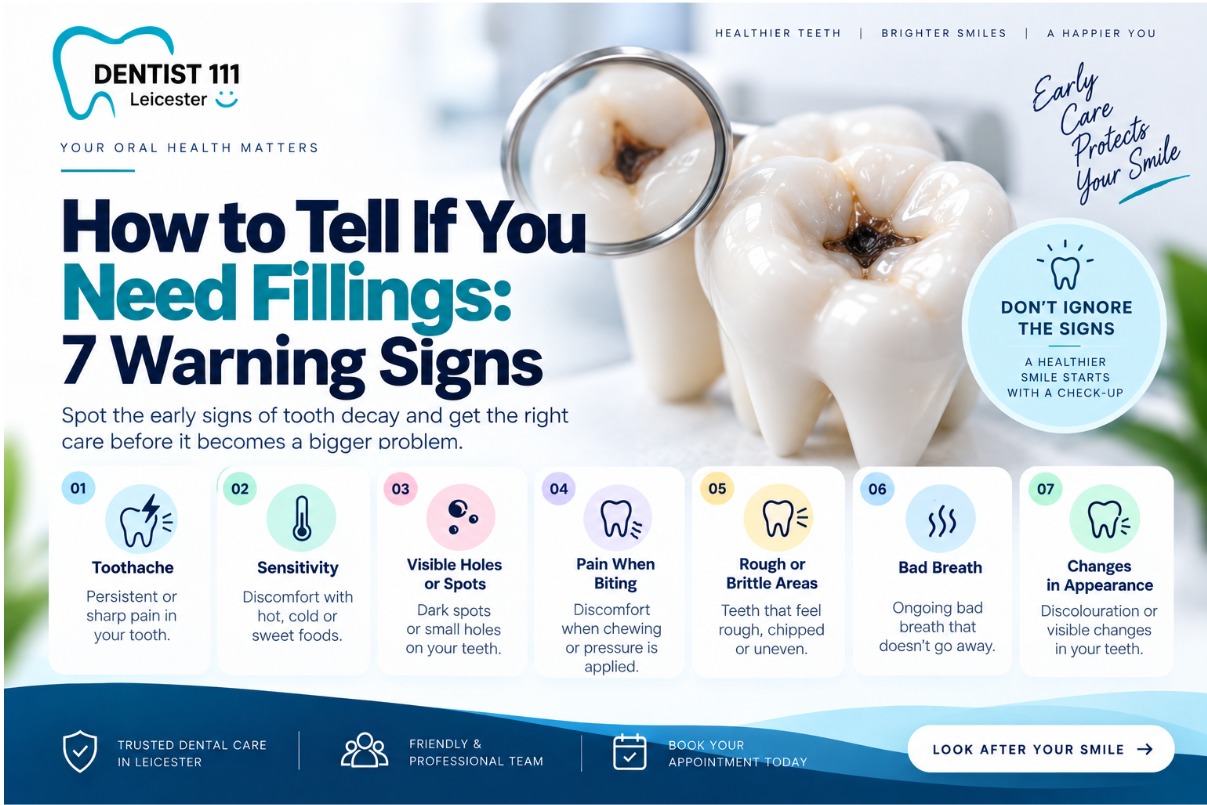
Learn how to tell if you may need a dental filling. Discover 7 common warning signs, why cavities can develop without pain, and how dentists confirm whether restorative treatment is needed.
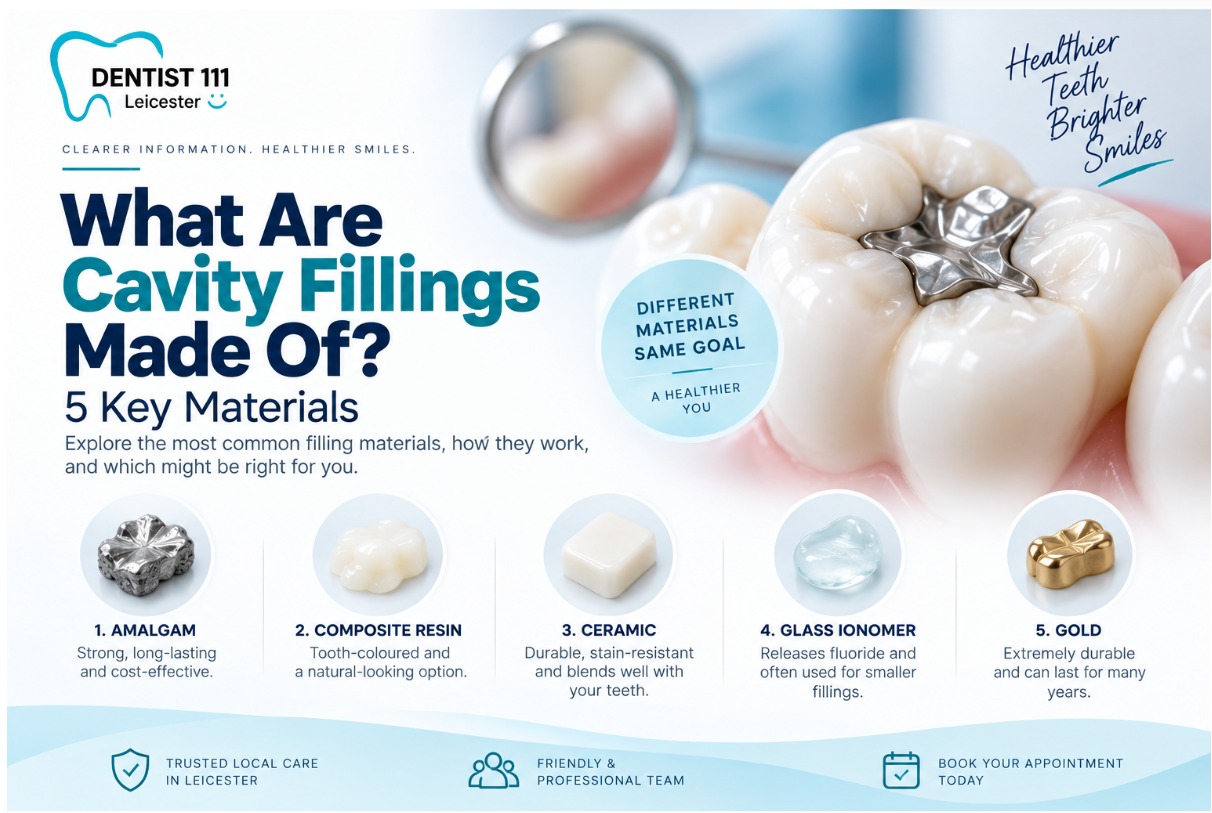
Cavity fillings can be made from five main material groups: composite resin, dental amalgam, glass ionomer, ceramic, and gold-containing alloys. Learn what each filling material is made of and how they differ.