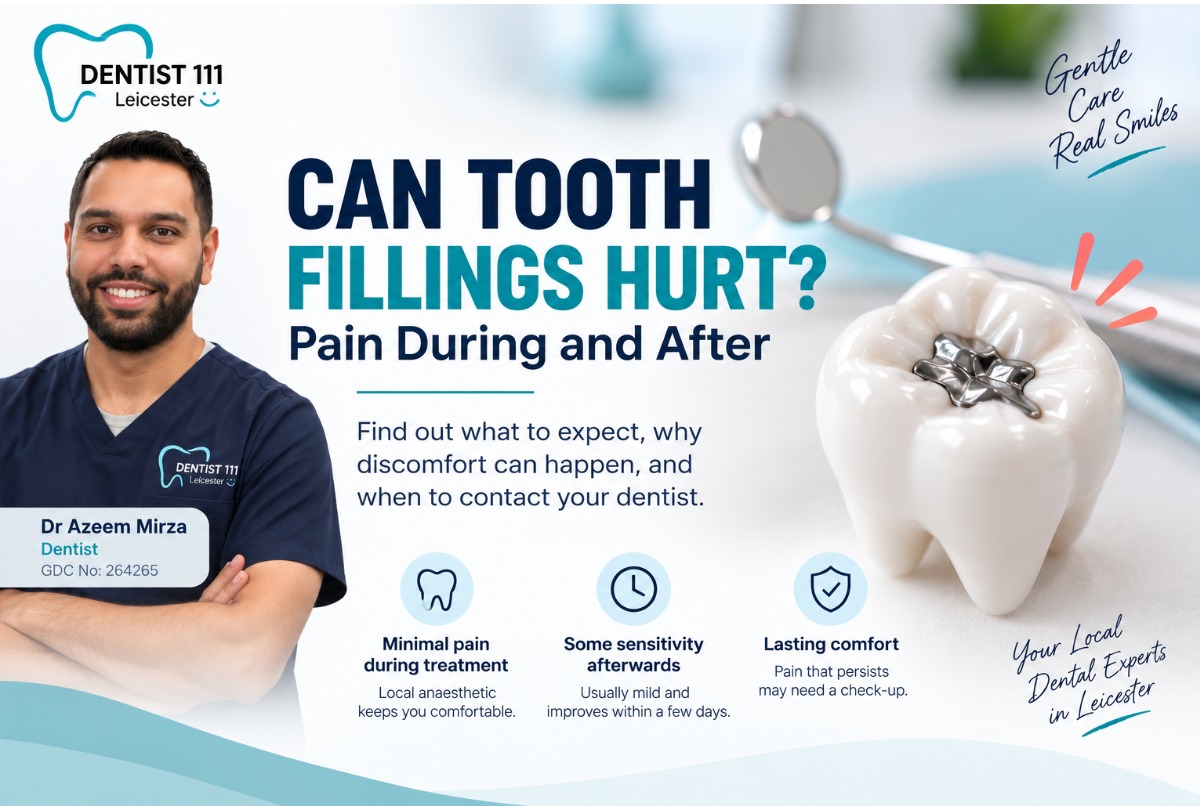
Can Tooth Fillings Hurt? Pain During and After
Most tooth fillings cause little or no sharp pain during treatment when effective local anaesthesia is established. You can feel pressure, vibration, or brief discomfort during the procedure. Mild sensitivity or tenderness can occur after the anaesthetic wears off and often improves as the tooth settles. Severe, persistent, or worsening pain requires dental assessment, particularly when pain occurs spontaneously, during biting, or with swelling. The American Dental Association recognises pain control and local anaesthesia as integral parts of dental treatment.
Do Tooth Fillings Hurt During the Procedure?
Most tooth fillings cause little or no sharp pain during treatment when effective local anaesthesia is used. You may feel pressure, vibration, or movement while the dentist removes decay and prepares the tooth. The local anaesthetic temporarily blocks pain signals from the treated tooth and surrounding tissues. Brief discomfort can occur during the injection, but the procedure itself generally remains comfortable once adequate numbness is established.
What Does a Tooth Filling Feel Like?
A tooth filling can feel like pressure, vibration, or movement rather than sharp pain during treatment. The dentist removes the decayed tooth structure while the local anaesthetic reduces pain sensation. You may notice pressure when the tooth is prepared and when the restoration is placed. Brief sensitivity can occur after treatment as the anaesthetic wears off.
Does the Injection for a Tooth Filling Hurt?
The injection can cause brief discomfort as the local anaesthetic enters the gum. Dentists use local anaesthetic to numb the tooth and surrounding tissues before removing decay. The sensation usually lasts only briefly, while the numbing effect develops over the following minutes. Once adequate anaesthesia is established, pressure and vibration can remain noticeable without the sharp pain of treatment.
Does a Tooth Filling Hurt After the Anaesthetic Wears Off?
A filled tooth can feel mildly sensitive or tender after the local anaesthetic wears off. Sensitivity can occur with cold or hot foods, while tenderness can occur during chewing. These symptoms can result from the tooth responding to the treatment, particularly when the restoration is close to the dental pulp. Severe, persistent, or worsening pain is not typical and requires dental assessment.
What Is Normal After a Tooth Filling?
Mild sensitivity to cold, hot, or sweet foods can occur after a tooth filling. The treated tooth can also feel tender when chewing, particularly during the early period after treatment. Gum tenderness can occur when the surrounding tissues were affected during the procedure. Symptoms that become severe, persist, or worsen require dental assessment.
Why Can a Tooth Be Sensitive After a Filling?
A tooth can become sensitive after a filling because the restoration can temporarily affect the tooth’s pulp-dentine complex. Cavity depth matters, with deeper restorations showing greater postoperative sensitivity in clinical studies. One study of 319 composite restorations found significantly more sensitivity in deep cavities than in shallow or medium-depth cavities. Sensitivity can also involve cold, heat, or chewing pressure, and symptoms that become severe or persistent require dental assessment.
What Causes Pain After a Dental Filling?
Pain after a dental filling can result from temporary sensitivity, a high filling, or inflammation inside the tooth. Temporary sensitivity can occur after treatment, particularly when decay was deep and the restoration was close to the dental pulp. A filling that sits too high can place excess pressure on the tooth during biting, causing localised pain. Severe, spontaneous, or worsening pain requires dental assessment because it can indicate deeper pulpal or other dental problems.
Can a Deep Filling Cause More Sensitivity?
A deep filling can cause greater sensitivity because the restoration lies closer to the dental pulp. Deeper decay leaves less healthy dentine between the restoration and pulp. This closer relationship can increase the tooth's response to cold, heat, or chewing pressure. Not every deep filling causes sensitivity, and persistent or worsening pain requires dental assessment.
Can a High Filling Cause Pain When Biting?
A high filling can cause pain when biting because it contacts the opposing tooth too early. This premature contact can increase pressure on the restored tooth during chewing. A dentist can check the bite and adjust the restoration when the filling interferes with normal tooth contact. Persistent pain after adjustment requires further dental assessment, because the pain may have another cause. The American Dental Association recommends clinical assessment when dental pain requires diagnosis and treatment.
Can Existing Pulp Inflammation Cause Pain?
A filling can remain painful when the dental pulp was already inflamed before treatment. Deep decay can affect the pulp before the filling is placed, so restoring the cavity does not always remove the underlying inflammation. Spontaneous pain, prolonged sensitivity, or pain without an obvious trigger can indicate a deeper pulpal problem. Persistent or worsening symptoms require dental assessment.
How Long Does Pain From a Filling Last?
Mild sensitivity after a filling often improves over several days, although the duration varies between teeth and treatments. Cold sensitivity, heat sensitivity, and mild chewing tenderness can occur during recovery. The University of Bristol states that sensitivity after a composite filling should not last more than 2 weeks. Pain that persists, worsens, or occurs without stimulation requires dental assessment.
How Can You Relieve Mild Pain After a Filling?
Mild pain after a filling can often be reduced by avoiding temperature extremes and limiting pressure on the treated tooth. Choose softer foods, such as yoghurt, porridge, or scrambled eggs, if chewing feels tender. Desensitising toothpaste can help reduce sensitivity to cold or hot foods when used regularly. Over-the-counter pain relief can also help when appropriate for you, following the product instructions or your dentist’s advice.
When Is Pain After a Filling Not Normal?
Pain after a filling is not normal when it becomes severe, worsens, persists, or occurs without stimulation. Warning signs include severe biting pain, spontaneous pain, swelling, or sensitivity that does not improve. A filling that feels high, becomes loose, or falls out also requires dental assessment. Rapidly worsening pain with significant swelling requires urgent dental care.
Does the Filling Material Affect Sensitivity?
Filling material can influence postoperative sensitivity, but it does not determine whether every tooth becomes painful. Composite restorations can produce temporary sensitivity, particularly in some deeper restorations. Clinical studies show that postoperative sensitivity can vary with cavity characteristics and restorative factors. Persistent sensitivity requires assessment of the tooth rather than assuming the material is responsible.
Frequently Asked Questions About Filling Pain
Can Fillings Hurt Years Later?
A filled tooth can hurt years later if new decay, restoration damage, or another dental problem develops. Pain does not automatically mean the original filling has failed. A dentist can examine the filling and surrounding tooth to identify the cause. New or persistent pain requires dental assessment.
Related Post
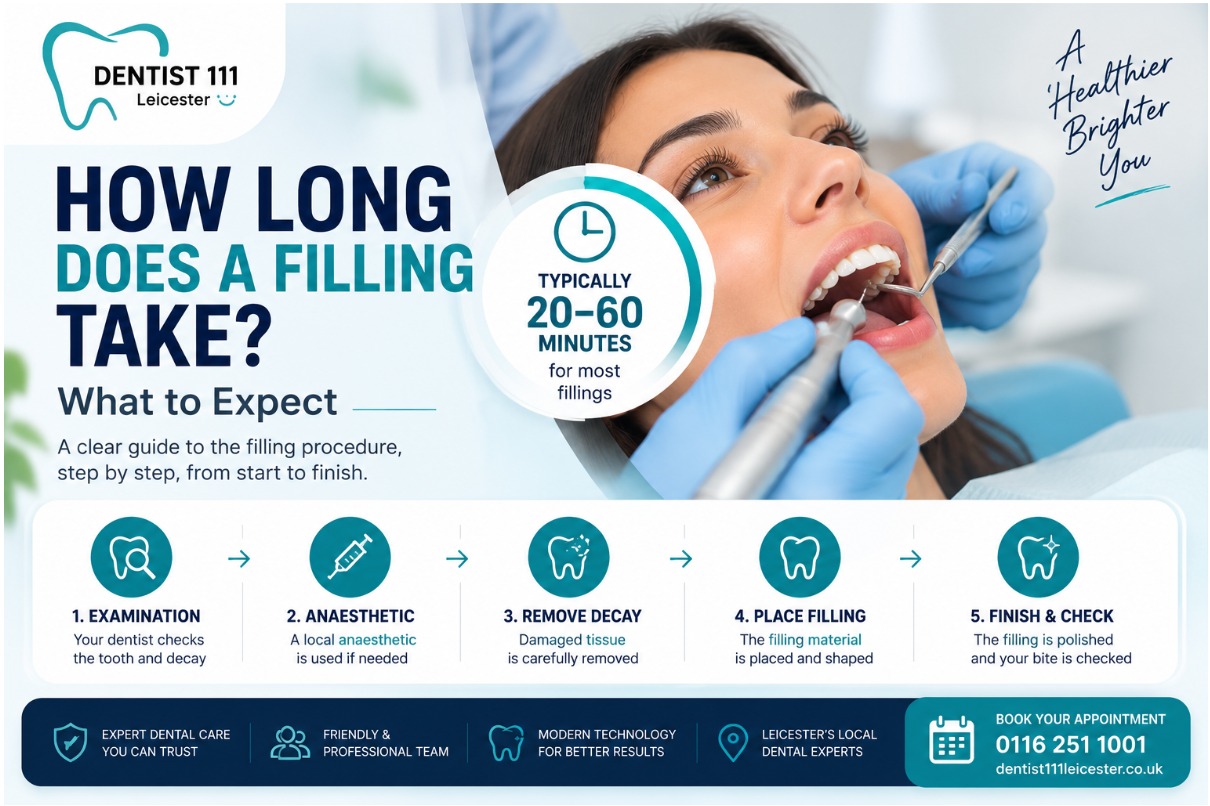
How long does a dental filling take? Learn the typical treatment time for one filling, what happens during the procedure, factors that affect timing, and how long multiple or deep fillings may take.
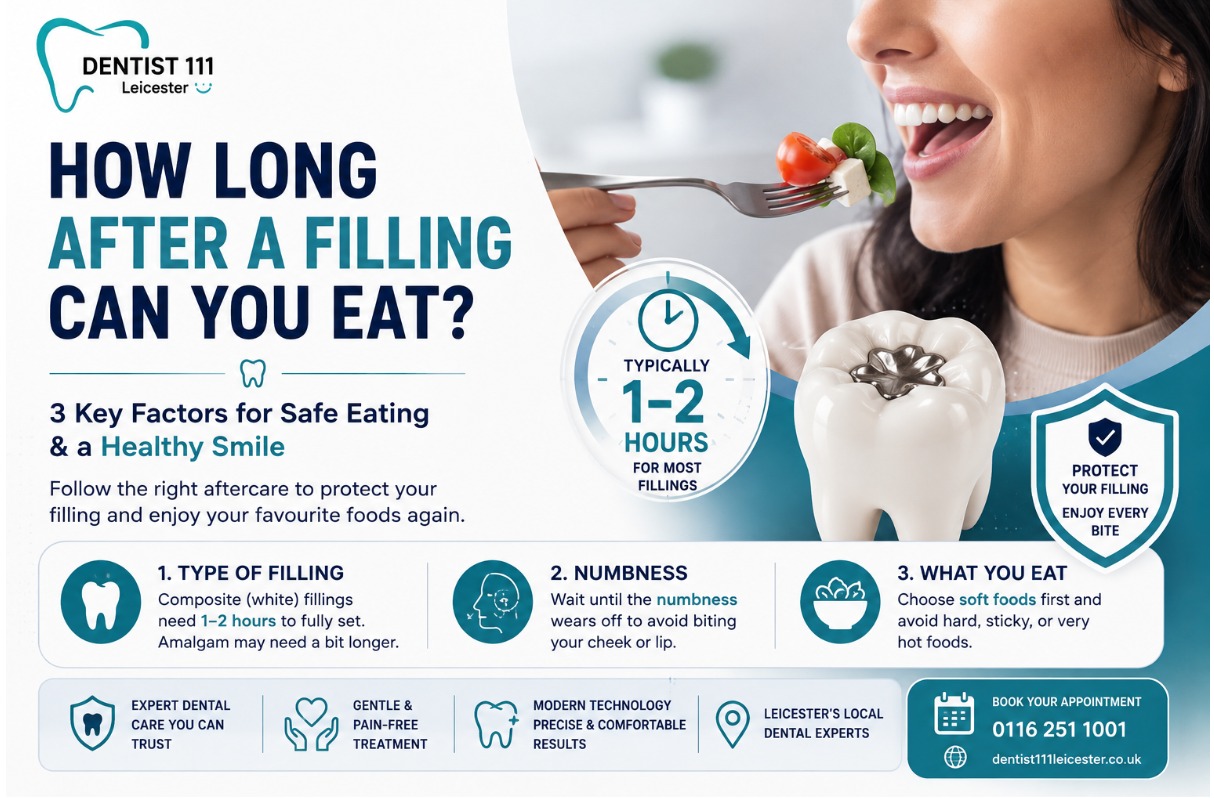
Find out when you can eat after a filling, how long dental numbness usually lasts, which foods are safest, and what to avoid while your tooth settles.