Do I Need a Filling? 7 Signs You Should Know
A cavity filling typically lasts 5–15 years, although some can remain functional for 20 years or longer. How long it lasts depends on the filling material, restoration size, tooth location, biting forces, oral hygiene and the condition of the surrounding tooth. Reaching a certain age does not automatically mean a filling needs replacing; its clinical condition determines whether replacement is necessary.
How to Tell If You Need Fillings
A tooth may need a filling when decay has created a cavity or damaged the tooth structure enough to require restoration. Common signs include tooth sensitivity, toothache, pain when biting, visible holes or discolouration, and food that repeatedly gets trapped around the same tooth. These symptoms can suggest a problem, but they cannot confirm that a filling is necessary.
Tooth decay can develop without noticeable symptoms, particularly in its early stages. As decay progresses, a cavity may form and lead to pain, sensitivity or visible changes in the tooth.
The difference between early tooth decay and an established cavity is important when deciding on treatment. Non-cavitated lesions can sometimes be managed with non-restorative approaches, while moderate or advanced lesions that require restorative treatment may be treated with a filling.
A symptom therefore provides a reason for a dental assessment rather than proof that a filling is required.
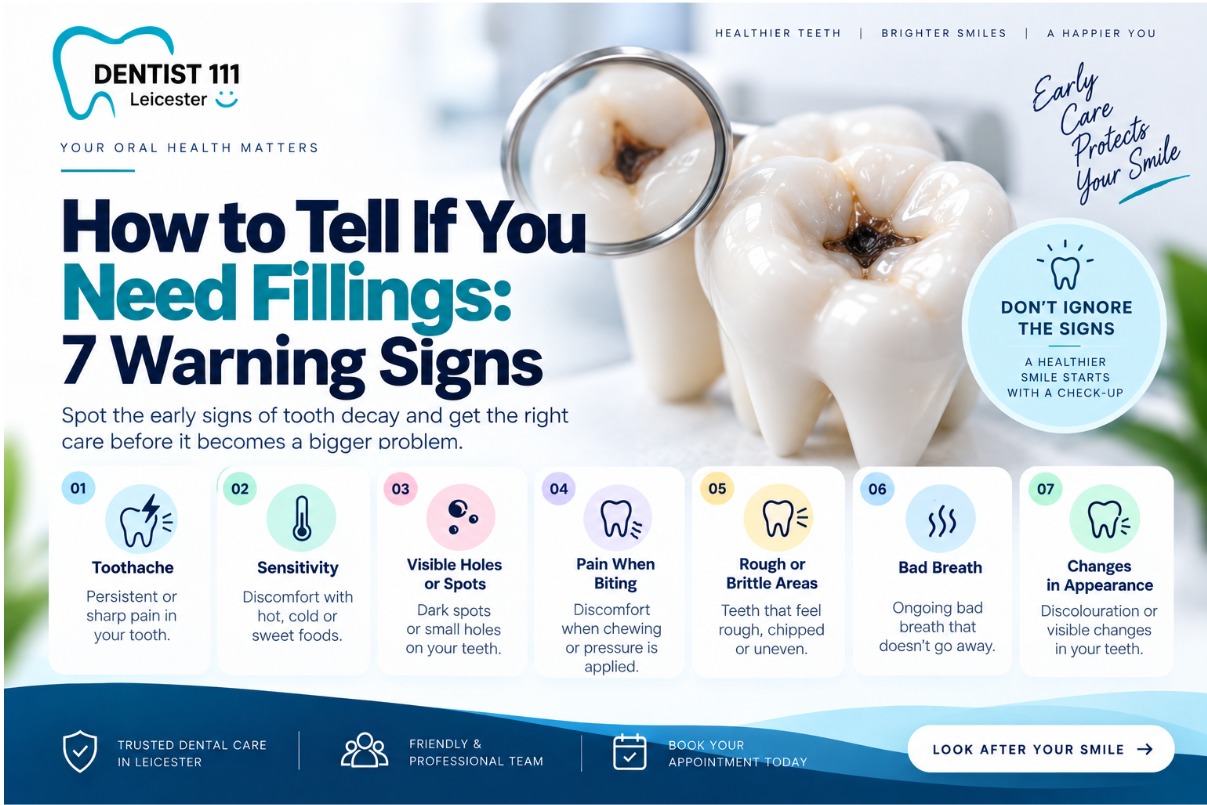
7 Signs You May Need a Filling
Seven signs that a tooth may require assessment for decay or structural damage are sensitivity, toothache, biting pain, visible changes, repeated food trapping, surface damage and unexplained changes without pain. Each sign can provide a different clue about the tooth's condition, while a dental examination is needed to determine the cause.
Tooth Sensitivity to Hot, Cold or Sweet
Sharp sensitivity to hot, cold or sweet foods and drinks can occur when tooth decay affects the tooth structure. A repeated reaction from the same tooth is more significant than occasional sensitivity affecting several teeth.
Sensitivity can also result from exposed dentine, gum recession or enamel wear. The underlying cause determines whether treatment for tooth decay is appropriate.
Toothache or Persistent Dental Pain
Persistent pain in one tooth can indicate that decay has progressed beyond its earliest stage. The pain may be aching, sharp or associated with eating and drinking.
Toothache can also result from a cracked tooth, gum disease or deeper infection. The pattern and location of the pain help guide the dental assessment.
Pain When Biting or Chewing
Pain when biting or chewing can indicate a problem affecting the structure or deeper tissues of a tooth. A sharp sensation that repeatedly occurs when pressure is applied to one tooth provides a more specific clinical clue than general mouth discomfort.
Possible causes include decay, a crack or inflammation, so examination is required to establish the cause.
A Visible Hole, Pit or Dark Spot
A hole or pit in a tooth can indicate a cavity, while a dark area can occur with decay or staining. A cavity represents physical loss of tooth structure, whereas colour change alone does not establish that a cavity is present.
A dentist can assess the area directly and use dental X-rays when decay may be hidden from view.
Food Repeatedly Gets Trapped
Food that repeatedly becomes trapped around the same tooth can indicate an altered tooth surface, contact area or cavity. Consistent trapping in one location is more relevant than occasional food retention between different teeth.
Decay, tooth wear, gum changes and existing restorations can all alter the way food collects around a tooth.
A Rough, Chipped or Damaged Tooth
A rough, chipped or damaged tooth can indicate a change in tooth structure caused by decay, trauma or tooth wear. A new rough edge or indentation is particularly relevant when it affects a previously normal tooth.
The extent and cause of the structural change determine whether monitoring, restoration or another treatment is appropriate.
A Tooth Looks or Feels Different Without Pain
A tooth can develop visible or surface changes without causing pain. These changes can include altered colour, a rough area, an indentation or a different surface texture.
Early tooth decay can remain symptom-free, so the absence of pain does not exclude a cavity. Examination can distinguish decay from staining, wear and other surface changes.
Can You Need a Filling Without Pain?
Yes, a tooth can need a filling even when it causes no pain. Early tooth decay often produces no noticeable symptoms, and decay can remain hidden between teeth or beneath the visible surface.
Pain is therefore not a reliable test for whether a filling is needed. A dental examination can identify decay before symptoms develop, using visual examination, clinical assessment, and dental X-rays when appropriate.
However, not every early area of decay requires a filling. Non-cavitated lesions can sometimes be managed with non-restorative treatments, while an established cavity may require restorative treatment depending on its depth, location, and activity.
This means a tooth can have decay without pain, but the presence of decay does not automatically mean that a filling is necessary. The treatment decision depends on the condition of the tooth identified during the dental assessment.
How Does a Dentist Confirm Whether You Need a Filling?
A dentist confirms whether a filling is appropriate by examining the tooth, assessing the extent of decay or structural damage, and using dental X-rays when hidden decay requires further investigation.
The assessment can include:
- Visual examination: checking for holes, pits, discolouration and surface changes.
- Clinical examination: assessing suspected decay and the remaining tooth structure.
- Dental X-rays: identifying decay that may be hidden between teeth or beneath surfaces.
The assessment distinguishes non-cavitated lesions from established cavities and considers whether restorative treatment is appropriate.
A clinical assessment can determine whether decay requires restorative treatment, including dental fillingswhere appropriate.
Does Every Cavity Need a Filling?
Not every area of tooth decay requires a filling; treatment depends on whether the decay has formed a cavity and on the characteristics of the lesion.
A non-cavitated lesion involves demineralisation without an established physical cavity and can sometimes be managed with non-restorative approaches.
An established cavity involves physical loss of tooth structure and may require restorative treatment. The distinction is important because early tooth decay does not automatically mean that drilling and filling is necessary.
What Happens If Tooth Decay Is Left Untreated?
Tooth decay can progress from an early lesion to a cavity and, when advanced, affect deeper structures of the tooth. Early decay may cause no noticeable symptoms, while further progression can lead to sensitivity, toothache and visible changes to the tooth.
More advanced decay can contribute to infection or a dental abscess. Once decay extends beyond what a conventional filling can manage, another form of dental treatment may be required.
When Should You See a Dentist?
A dental assessment is appropriate when a tooth develops persistent pain, repeated sensitivity, pain when biting, a visible cavity, repeated food trapping or an unexplained change in its surface.
Prompt assessment is particularly important when there is:
- persistent or severe toothache
- swelling
- signs of infection
- significant pain when biting
- a rapidly worsening dental problem
Early decay can also develop without noticeable symptoms, so routine dental examinations can identify changes before they become apparent.
FAQs
At What Point Does Tooth Decay Need a Filling?
A filling may be appropriate when decay has created a cavity and restorative treatment is required to restore lost tooth structure. Early non-cavitated lesions can sometimes be managed without restoration.
Can a Cavity Get Worse Without Pain?
Yes. Tooth decay can progress without noticeable pain, particularly during its earlier stages. Having no symptoms does not mean that decay has stopped progressing.
Can a Dentist See a Cavity During a Routine Examination?
Some cavities can be identified during a clinical examination, while decay between teeth or beneath visible surfaces may require dental X-rays for further assessment.
Can a Dentist Tell How Deep a Cavity Is?
A dentist can assess the extent of decay through a clinical examination and, when appropriate, dental X-rays. These findings help determine the condition of the remaining tooth structure and the appropriate treatment.
Can a Cavity Between Two Teeth Be Detected Without an X-Ray?
Some decay between teeth may be detected clinically, but X-rays can provide additional information when the affected area cannot be assessed directly.
Can Early Tooth Decay Be Reversed?
Some early, non-cavitated lesions can be arrested or managed with non-restorative treatment. Management depends on the characteristics of the lesion and its risk of progression.
Related Post
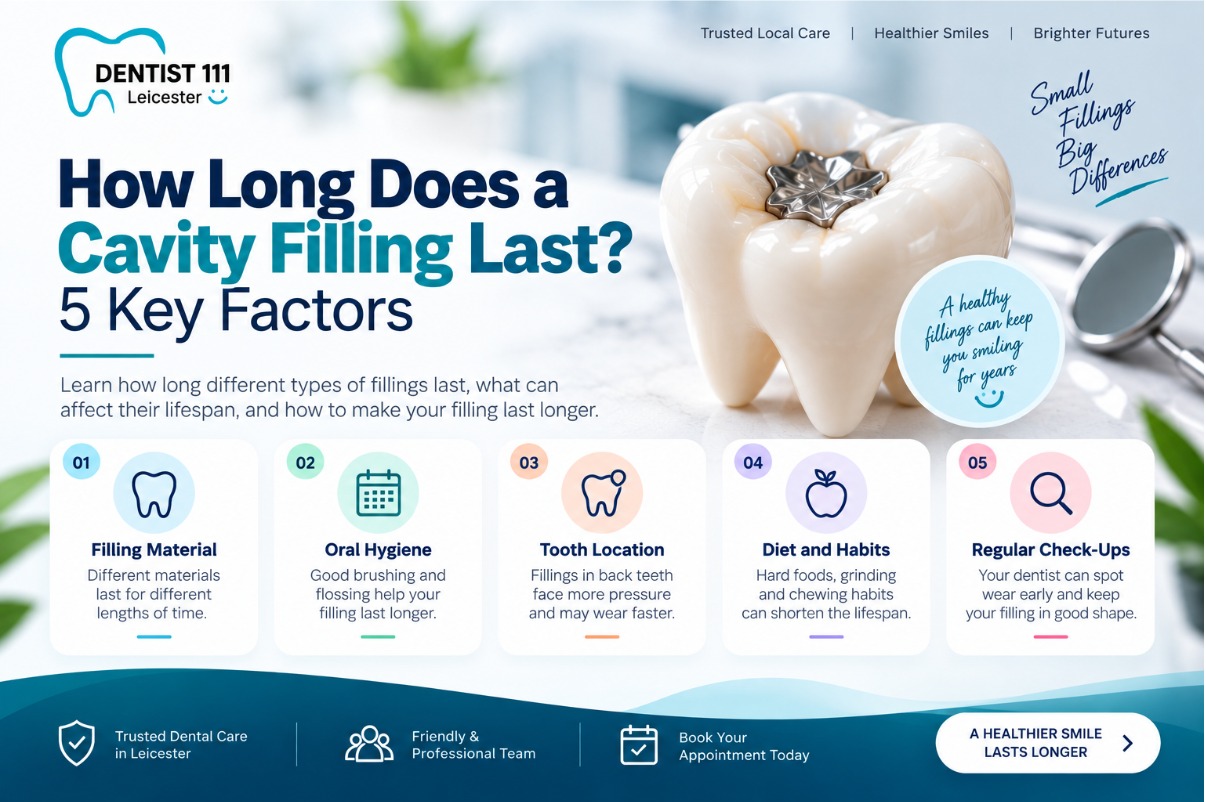
Dental fillings can last anywhere from several years to two decades or more, depending on the material, filling size, tooth location, biting forces, oral hygiene and restoration quality.